
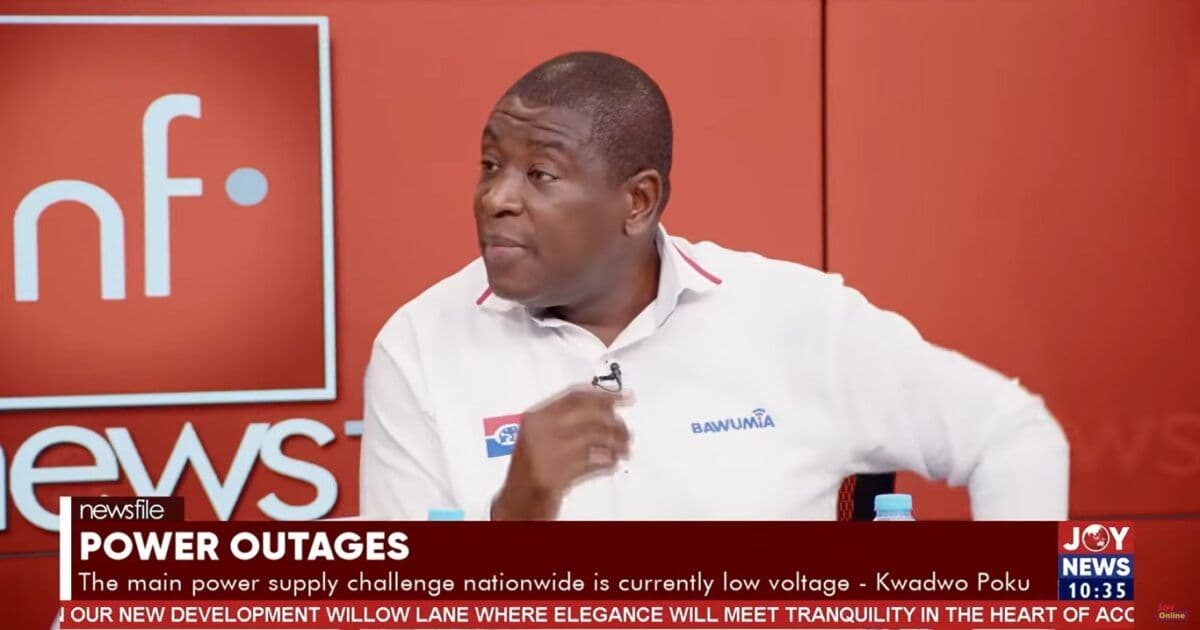
On Saturday 28 November 2026, Kwadwo Poku, Executive Director of the Institute of Energy Policies and Research, warned that Ghana’s persistent power outages stem from a neglected transmission network rather than a lack of generation capacity. Poku said the country’s electricity challenges cannot be solved by simply adding more power plants; the grid that carries electricity from the south to the north and middle belt is failing to meet rising demand.
Speaking on JoyNews’ Newsfile, Poku recalled a 2020 prediction that the next major disruption would arise from transmission failures. He noted that although generation and gas supply have improved, consumers still face frequent outages because the transmission lines cannot move electricity efficiently to high‑demand areas.
“The lights are still going off,” Poku said, pointing to the concentration of generating stations in the south and the strain this places on the network. He added that weather patterns also expose the grid’s weaknesses, with demand dropping by about 300 MW during the cooler months of June to September but rising sharply again as temperatures climb.
Poku urged the government to prioritize investment in transmission infrastructure alongside generation expansion. He warned that without urgent interventions, blackouts will continue despite the country’s growing generation capacity.
He acknowledged that the necessary transmission upgrades would take time to complete, but emphasized that the lack of investment in the past two years is the root cause of the ongoing supply challenges.