
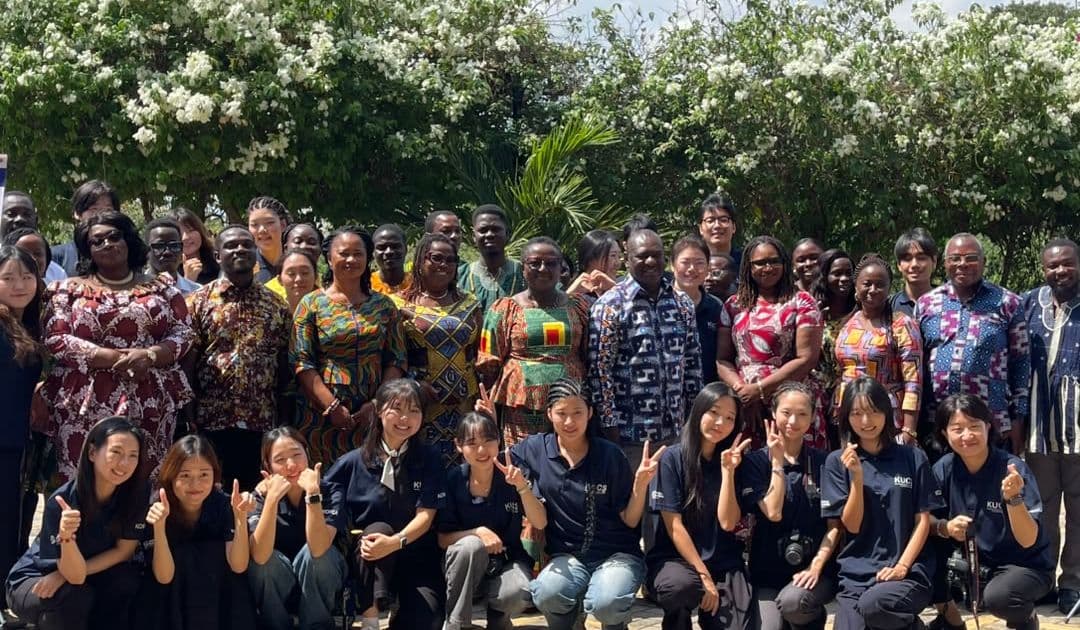
In a partnership backed by the Republic of Korea, Korean volunteers have delivered an ICT capacity‑building programme to teachers in selected basic schools across the Cape Coast Metropolis. The initiative, run through KOICA and the Korean University Council for Social Service, has focused on practical use of Microsoft Word, Excel and PowerPoint in daily teaching and administrative tasks.
Headmistress Nora Nyarko of Kakumdo M/A Basic School said the training has noticeably improved teachers’ ability to use these applications, describing the programme as transformative and noting that pupils now experience new learning methods and closer interaction with the volunteers. She added that the project has fostered friendships and strengthened cultural ties between the school community and the Korean helpers.
Similarly, Headmistress Evelyn Efua Panyin of Efutu M/A Basic School reported that teachers feel more confident preparing presentations, structuring lesson content and managing school data. She highlighted that the skills acquired are streamlining record‑keeping and enhancing overall teaching quality.
Cape Coast Metropolitan Director of Education Mr. Thomas Kwofie praised the volunteers for building on the achievements of the first batch and expressed optimism that the partnership would continue to support educational development in the metropolis. Field Manager of KUCSS Ms. Miyoung Kim revealed that 34 volunteers served in two batches between April and December, working in four schools and combining ICT training with cultural exchange activities for pupils.
As part of the intervention, the first batch established an ICT room at Wesley Girls’ Basic School, while the second developed a textbook, ICT for Basic Schools, to provide structured learning materials. More than 400 printed copies have been distributed to 67 Cape Coast schools, with free digital versions available online for about 1,000 schools in the Central Region and beyond.
Central Regional Director of Education Dr. Juliette Dufie Otami commended the volunteers for supporting teachers’ professional development and for providing resources that will sustain the programme after their service ends. She noted that the step‑by‑step textbook will allow teachers and pupils to continue developing ICT skills independently.
The Youth Mid‑Term Volunteer Programme, supported by KOICA and KUCSS, aims to bring Korean youth and local communities together through educational and cultural activities, promoting sustainable development and international cooperation.
With the programme now in its second batch, stakeholders anticipate further integration of ICT into classroom instruction across the Cape Coast Metropolis, potentially setting a model for other regions.